
What’s the difference between WordPress and Shopify?
You’ve decided to build your showcase or e-commerce site with a powerful CMS, but you don’t know which one to choose? Don’t worry: in this article, we review, point by…
You’ve decided to build your showcase or e-commerce website with a high-performance CMS, but you don’t know which one to choose? Don’t worry: in this article, we go through the differences between WordPress and Shopify point by point: purpose, costs, technology, SEO and maintenance.
Looking for a decision guide based on your profile instead? Read our article WordPress or Shopify: which CMS should you choose for your website. And if you’d rather have expert support, feel free to contact our team of experts for the design of a website that reflects who you are.
What is a CMS?
To begin with, it’s important to understand what a CMS (Content Management System) is. Put simply, it’s a system for managing content that lets you, among other things, build and manage a website. A CMS has all the tools you need to run your site: adding content, design, updates, configuration…
A CMS is often fairly easy to get started with, usable by anyone, and lets you build a website based on your expectations, your needs and your industry. To build a site that suits you, you first need to define your project and your site’s objectives: that’s what will let you choose the CMS that best meets them.
Difference 1: what each CMS is built for
WordPress, built for showcase websites
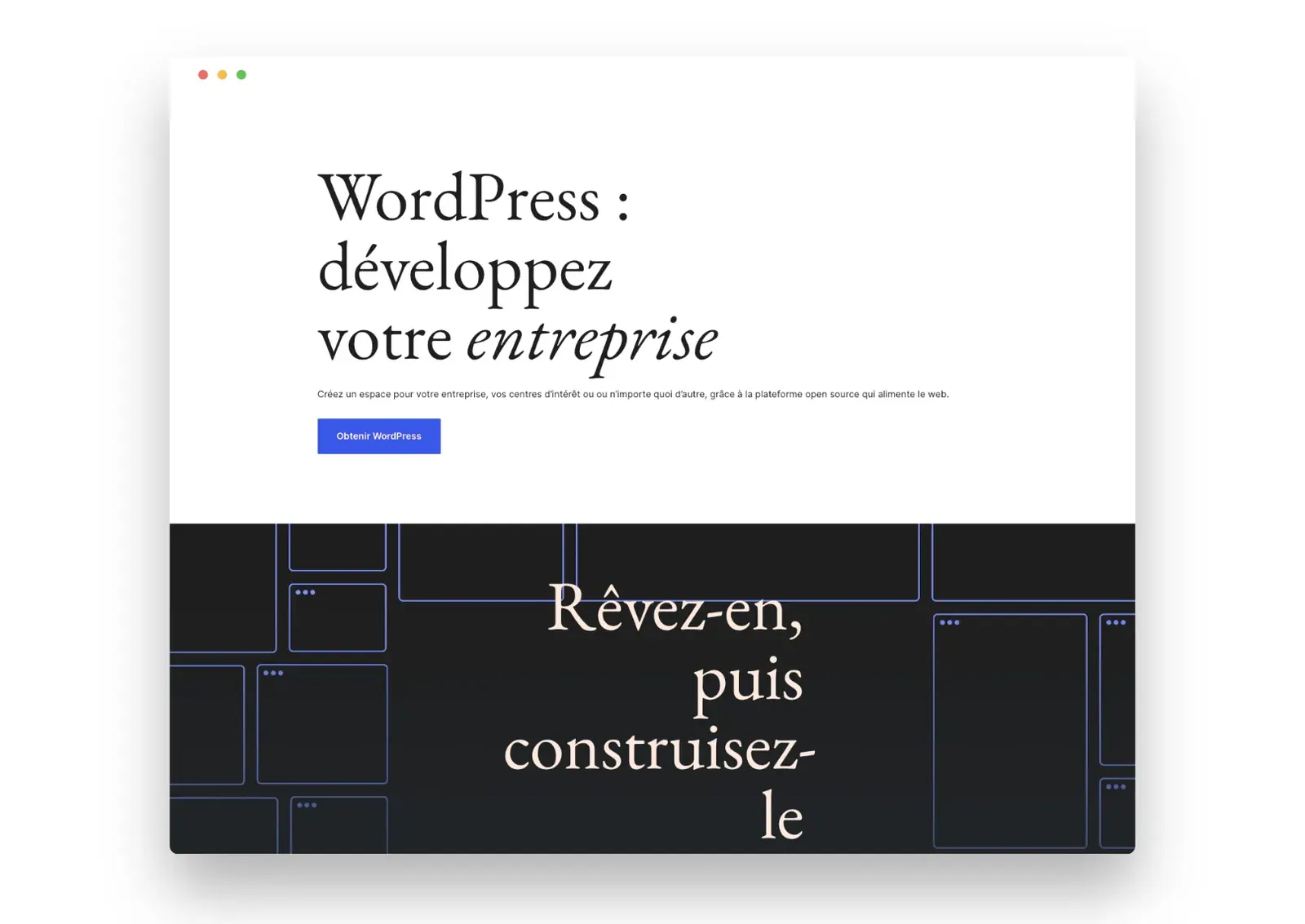
Have you always dreamed of having a showcase website for your brand? It’s possible (and advisable) with WordPress and its many plugins. WordPress is particularly well suited to building showcase websites that highlight your company, your products, your services or your news.
If you’re in Overseas France, in Guadeloupe, Martinique or French Guiana, WordPress will let you communicate effectively beyond your borders, with a site visible anywhere in the world. Your company’s brand image is essential and must be showcased with the right tools (on that subject, find out how to build a strong visual identity).
Shopify, dedicated to e-commerce
Unlike WordPress, Shopify is dedicated to building e-commerce websites. Its tools and apps are designed for setting up a real online store: product management, orders, payments, promotions, etc.
This CMS is especially popular with entrepreneurs and companies looking to grow their business online, with local or international reach. According to W3Techs, it powers 32.1% of the e-commerce sites tracked as of October 1st, 2026, while WordPress runs 40.2% of all websites.
Difference 2: the model and the costs
This is the fundamental difference. WordPress is free, open-source software: you install it on a hosting service of your choice. The software costs nothing, but a professional website involves expenses:
- hosting and the domain name;
- the theme and any premium plugins;
- maintenance (updates, backups, security).
Shopify works on a monthly subscription, hosting included. According to Shopify’s official pricing (checked on October 1st, 2026):
- Basic: €27 a month billed annually (€36 billed monthly);
- Grow: €79 a month billed annually (€105 billed monthly);
- Advanced: €289 a month billed annually (€384 billed monthly);
- Plus: from €2,100 a month, for companies with complex needs.
On top of the subscription come transaction fees: with Shopify Payments, from 1.5% + €0.25 per standard online card payment on the Basic plan; with an external payment provider, additional fees ranging from 2% (Basic) to 0.2% (Plus). Not to mention the paid apps you’ll add to your store.
Difference 3: technology and customization
With WordPress, you control everything: the code, the theme, the plugins, the hosting. This freedom lets you build a truly custom site, but it takes skills to make the most of it.
Shopify offers a more structured framework: themes and apps designed for selling, in an environment the platform controls. What you gain in simplicity, you lose in freedom. In both cases, getting started is relatively easy, but a site that is attractive, optimized and compatible with every device takes the eye of a specialized team.
Difference 4: search engine optimization (SEO)
Both CMSs can help you rank well on Google. WordPress offers very fine-grained control (page structure, URLs, tags), especially through dedicated SEO plugins, which makes it a strong ally for a content-rich site.
Shopify provides the basics a store needs, but imposes certain conventions, such as its URL structure (/products/, /collections/). For an ambitious editorial strategy, WordPress stays one step ahead; for a store, Shopify is more than enough if it’s properly configured.
Difference 5: maintenance and security
On WordPress, you’re responsible for updating the core, the theme and the plugins, as well as for backups and security. It’s ongoing work, best handed to a provider if you don’t have the resources in-house.
On Shopify, hosting, the SSL certificate and platform security are handled for you and included in the subscription. You focus on your products and sales, but you depend on the platform’s choices.
Building a truly optimized website takes more than a few plugins.
Why choose an agency that specializes in building websites?
As we’ve seen, WordPress and Shopify are both accessible CMSs. However, getting to grips with them takes time, and sometimes technical skills in web design, usability or SEO. Working with a team of website experts means:
- saving precious time;
- avoiding technical or strategic mistakes;
- getting tailored support;
- ending up with a reliable, secure and profitable website.
Your initial investment pays for itself quickly, especially if your business operates in high-potential areas such as the French Caribbean or French Guiana. And to build a professional online store that is secure and optimized for conversion, working with e-commerce experts often pays off. Bitwip, a communications, marketing and web design agency, can be that partner.
Frequently asked questions
What is the main difference between WordPress and Shopify?
WordPress is free, open-source and highly customizable software, ideal for showcase websites. Shopify is a hosted, subscription-based e-commerce solution that brings all the sales tools together in one place.
How much does Shopify cost per month?
In France, from €27 a month (Basic plan, billed annually) to €289 a month (Advanced), and from €2,100 a month for Shopify Plus, plus transaction fees and paid apps.
Is WordPress better than Shopify for SEO?
WordPress offers more technical freedom, which is useful for a content-rich site. Shopify provides a solid foundation for a store, with set conventions. Properly configured, both can rank well.
Need an opinion on your project? Let’s talk.