
SOPs in agencies: how process documentation is revolutionizing productivity
“S***, how did I do this last time again…?” Know that sinking feeling? Of course you do: it’s when you lose 15 minutes looking for something you could have documented in 2. The…
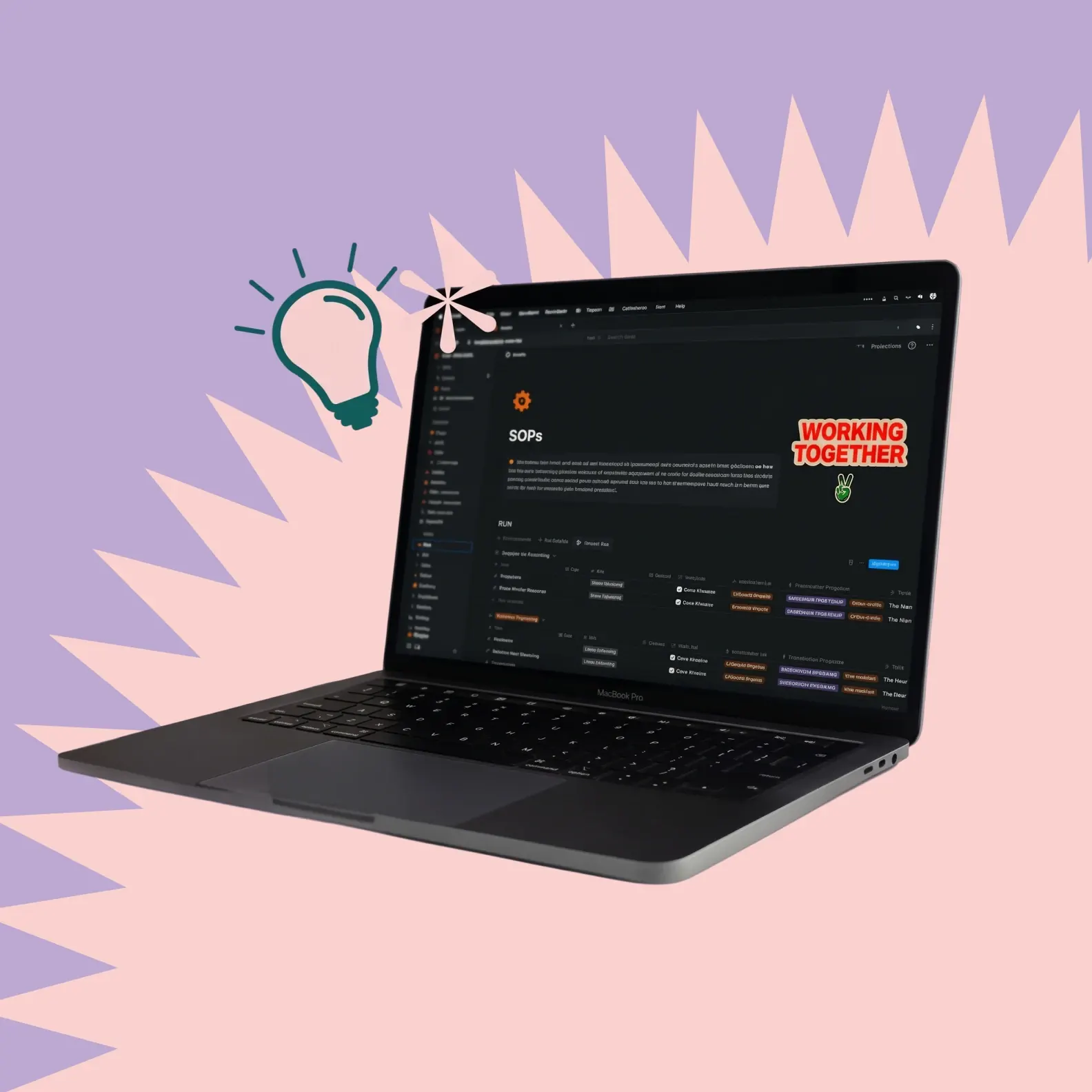
“S***, how did I do it last time again…?” Does that awkward moment ring a bell? Of course it does: it’s when you lose 15 minutes looking for something you could have documented in 2.
Communications agencies that thrive rely on SOPs (Standard Operating Procedures) to build on their know-how and save precious time. A closer look at a quiet revolution: process documentation, the kind that transforms the productivity of creative teams.
Lost memory syndrome: when expertise evaporates
“We all know each other,” “We communicate well,” “It takes time”: the three classic excuses for not documenting processes. Yet how many agencies find themselves in one of these situations?
- Someone goes on vacation and nobody can pick up their work.
- An “obvious” procedure is done differently depending on who does it.
- A new team member struggles with a task their predecessor had mastered.
Each time, it’s time lost searching for information that has already been dealt with. Time that could be reinvested in pure creativity.
The urgent need to build on collective knowledge
In a sector with high turnover, every departure takes part of the expertise with it. French Caribbean agencies, which are often small, are particularly vulnerable to this loss of know-how.
What’s at stake? Turning individual knowledge into collective capital. That’s where SOPs come in.
Next-generation SOPs: beyond simple documentation
The method that works
Vincent Reboul, head of the Bitwip agency, has developed a pragmatic approach. Each SOP contains:
- the context (what it’s for, when to use it);
- the process steps (detailed, step by step);
- the resources (docs, links, tools);
- a Loom tutorial recorded live to make it all concrete.
His golden rule? As soon as he does a task more than once, he creates an SOP.
“Yes, it takes time. But it’s time we’ll never lose again.”
AI powering SOPs: the revolution is underway
Artificial intelligence is transforming process management. Tools like Dust let you query your SOP base directly:
- the team asks its questions and the AI answers instantly;
- search is semantic across all the documentation;
- processes are suggested proactively based on context.
The result: far less time spent looking for information. And a well-maintained SOP base is also the best fuel for AI agents connected to your tools, which is exactly what MCP makes possible.
Where do you start?
- To win over the team: start with the most time-consuming processes and show the concrete time savings on 2 or 3 pilot examples.
- To avoid drowning: there’s no need to document everything. Prioritize tasks that are repetitive, critical or error-prone: the 80/20 rule applies.
Conclusion: the future belongs to agencies that build on what they know
SOPs are no longer optional: they are a competitive advantage. Agencies that document their processes:
- scale more easily (faster onboarding);
- reduce errors (standardization);
- free up creative time (less searching);
- prepare for growth (repeatability).
Automation, data, AI: SOPs are part of this drive for operational efficiency. And they are often the first building block of a successful AI project, as we explain in our guide why 80% of AI projects fail.
Next step? Start small: identify your 3 most time-consuming processes and document them this week. Your future self will thank you.
Frequently asked questions
How long does it take to create an effective SOP?
Allow 30 to 45 minutes for a simple process and 2 hours for a complex workflow. The investment pays for itself by the 3rd use.
Which tool should you choose for your SOPs?
Notion remains the benchmark for its flexibility. Alternatives: Confluence, GitBook or Monday.com, depending on your needs.
How do you keep SOPs up to date?
Assign an “owner” to each process, schedule a quarterly review and use automatic notifications.
Want to structure your processes without spending your evenings on it? Let’s talk.